Explained: Why Deadwood Is Essential for Woodland Wildlife
A fallen branch is not litter. Leave it where it lands and it becomes a larder, a nursery and a winter shelter at the same time. Deadwood — the standing stumps, crumbling logs and heaps of twiggy debris many of us itch to tidy away — carries a surprising amount of the wildlife in a British wood. Take it out and the place goes quiet: fewer beetles, fewer fungi, fewer birds working through the bark. Putting deadwood back is one of the cheapest and simplest things you can do for a patch of trees.
What Counts as Deadwood
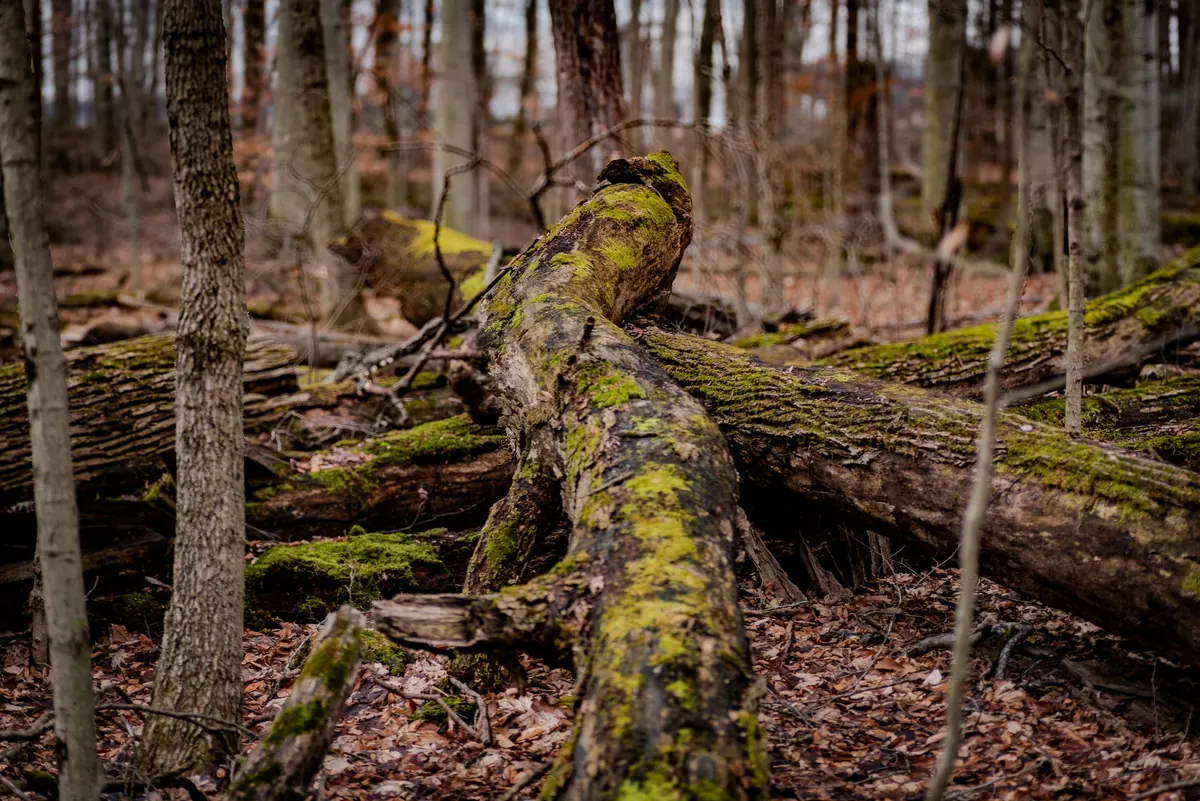
Deadwood is more than a fallen oak limb. It covers standing dead trees (often called snags), stumps, rotting roots, windblown branches, loose twigs, hollows in living trees, and the soft red-brown crumb that used to be a log. Stage of decay matters as much as size. A branch that came down last winter is a different habitat from a stump that has been rotting for fifteen years, and both differ again from a hollow forming inside a living oak.
Decay runs through recognisable stages, and each suits a different set of creatures:
- Fresh dead wood. Bark tight, timber hard. Bark beetles, woodwasps and the first borers move in.
- Part-rotted. Fungi have softened the wood. Beetle larvae tunnel deeper and bracket fungi push out fruiting bodies.
- Well-rotted. Crumbly, damp and rich. Worms, millipedes and countless small invertebrates work through it as it turns to soil.
Variety is the point. A wood with deadwood at every stage, from a fresh windblown limb to a stump that collapses when you touch it, holds far more life than one tidy stack of logs.
The Engine Room: Fungi and Insects
Fungi do the heavy lifting, and they do it invisibly. Threads of mycelium spread through timber, breaking down lignin and cellulose and releasing the nutrients locked inside. Softened wood then becomes accessible to insects that could never chew through sound timber, and hollows form where decay has eaten inwards — future nest sites for birds and bats.
Insects are the other half of the engine. A large group of invertebrates depends on dead or decaying wood at some point in its life, feeding on the wood itself, on the fungi growing through it, or on the other insects gathered there. Beetle larvae are the best known, but flies, moths, wasps and their parasites all join in. Some are fussy about tree species, dampness, sun or shade, which is why a range of deadwood in different spots beats one big log.
You rarely see most of this. What you notice is the result — the crumbling stump, the beetle with a metallic sheen climbing over bark, the bright orange fungus on a fallen birch.
Birds That Rely on Deadwood
Woodpeckers are the obvious names. Great spotted woodpeckers chisel into dead and dying timber for grubs, and their old nest holes become homes for tits, nuthatches and starlings later on. Treecreepers and nuthatches work their way over bark, picking off insects sheltering in crevices. Tits hunt through loose bark for overwintering larvae and eggs — a food source that keeps giving in the cold months when caterpillars are nowhere to be found.
Then there are the birds that nest inside deadwood rather than on it. Stock doves, owls and some ducks use large hollows. Where standing dead trees are cleared for safety, those holes disappear with them.
Mammals, Amphibians and Reptiles
Bats use deadwood differently again. Crevices behind loose bark, splits in a trunk and rot holes are roost sites, particularly for species that tuck themselves into trees rather than buildings. Hedgehogs, voles and shrews forage among log piles for invertebrates and use them as cover; a well-built heap of logs and leaves holds warmth and moisture through the winter.
Reptiles and amphibians appreciate the same thing. Slow worms and grass snakes often use rotting material that warms up in the sun, and frogs and toads retreat into damp crevices when the weather turns dry. In parts of southern England, buried stumps and rot holes are important breeding sites for stag beetle larvae, which spend years underground in decaying wood before emerging.
Standing Dead Trees and Safety
A standing dead tree is the most valuable piece of deadwood in a wood, and the hardest to keep. It offers height, sunlit timber and deep cracks that a log on the ground never will. It also sheds branches, which is where safety comes in.
If a dead or dying tree stands near a path, road, building or boundary, have it assessed by a qualified arboriculturist before deciding anything. There is often a middle path: a monolith, meaning the trunk left standing but reduced in height, with dangerous limbs removed. You keep the habitat and remove the risk. Never take down a large dead tree yourself — dead timber behaves unpredictably.
Building a Habitat Pile
A log pile can be rough and quick. The aim is a heap with plenty of gaps, tucked somewhere it can rot quietly for years.
- Pick the spot. Part shade works well — not bone dry, not permanently waterlogged. Keep a metre or two clear of paths, boundaries and property, and don't stack against the trunk of a living tree.
- Gather mixed material. Logs of different diameters (roughly 10–30cm across is a useful range), branches, twigs, leaves and a little soil. Untreated, unpainted wood only, and reuse what is already on site rather than importing timber.
- Stack loosely, criss-cross. Lay logs at angles so gaps and crevices form. Don't nail or wire it together and don't compress it — the spaces are the habitat.
- Bury some of it. Partly sink a couple of logs or a stump into the ground. Buried, damp wood is where many beetle larvae do best.
- Add a fringe. A few stones at the base, some fallen leaves, a scatter of twigs around the edge. That softening helps amphibians and small mammals.
- Then stop. Leave it alone. Top it up now and then, but don't turn it, tidy it or move it.
Mistakes to Avoid
- Tidying up
Photo: Jason Nelson / Pexels