How to Identify and Harvest Wild Garlic Safely
Wild garlic announces itself before you see it. Step into a shaded wood in late March and the smell arrives first — green, sharp, unmistakably onion. A few paces further and the ground is a carpet of broad soft leaves, followed in April by drifts of white star flowers. It is one of the easiest wild foods to find, one of the most generous to cook with, and also one of the most commonly misidentified. Get it right and you have free leaves for pesto, butter and soup. Get it wrong and you may be holding something toxic. Here is how to tell the difference, pick within the rules, and leave the patch in good shape for next spring.
Know what you're looking at
Wild garlic, also called ramsons, is Allium ursinum. It grows from a small bulb and sends up lance-shaped leaves that are soft, bright green, hairless and slightly keeled along the midrib, usually somewhere between 10cm and 25cm long. The underside is paler, with a clear central vein. Flowers are white, six-petalled and starry, held in loose clusters above the leaves.
You will find it in damp shade — under beech and oak, along stream banks, in old hedgerows and on shady lanes — often in dense swathes where little else grows on the woodland floor. Leaves appear as early as January and are at their best from March until the flowers open. After flowering, they turn tough and the flavour sharpens, so most foragers stop picking leaves around late May.
The smell test that settles everything
Pick a single leaf, tear it across and smell it. Wild garlic should hit you with clean, fresh garlic — the same note as a crushed clove, but greener. If a leaf smells of grass, damp earth or nothing at all, walk away.
Do this before you look at anything else: shape, position and leaf markings vary with age and soil, but the smell does not. And never taste a leaf you have not already identified. The smell test is quick, free and reliable, which is why experienced foragers do it on every plant, even in a patch they have picked for years.
UK lookalikes to rule out
Several woodland plants have broad leaves in similar places, and a few of them are seriously toxic. None of them smells of garlic when crushed.
- Lily of the valley — broad leaves in the same woods, usually in pairs, matte with a noticeable groove. Toxic. No garlic smell.
- Lords-and-ladies (cuckoo pint) — glossy arrow-shaped leaves, often with purple-black spots. Toxic. Smells green and earthy.
- Autumn crocus — broad, strappy, glossy leaves in spring, before its flowers appear in autumn. Highly toxic. No garlic smell.
- Bluebell — narrow strap leaves rather than broad ones. Not a garlic, and protected in many places.
- Dog's mercury — dull, toothed green leaves, often in the same shade. No garlic smell.
- Snowdrop — narrow leaves, no garlic smell, and not something to pick.
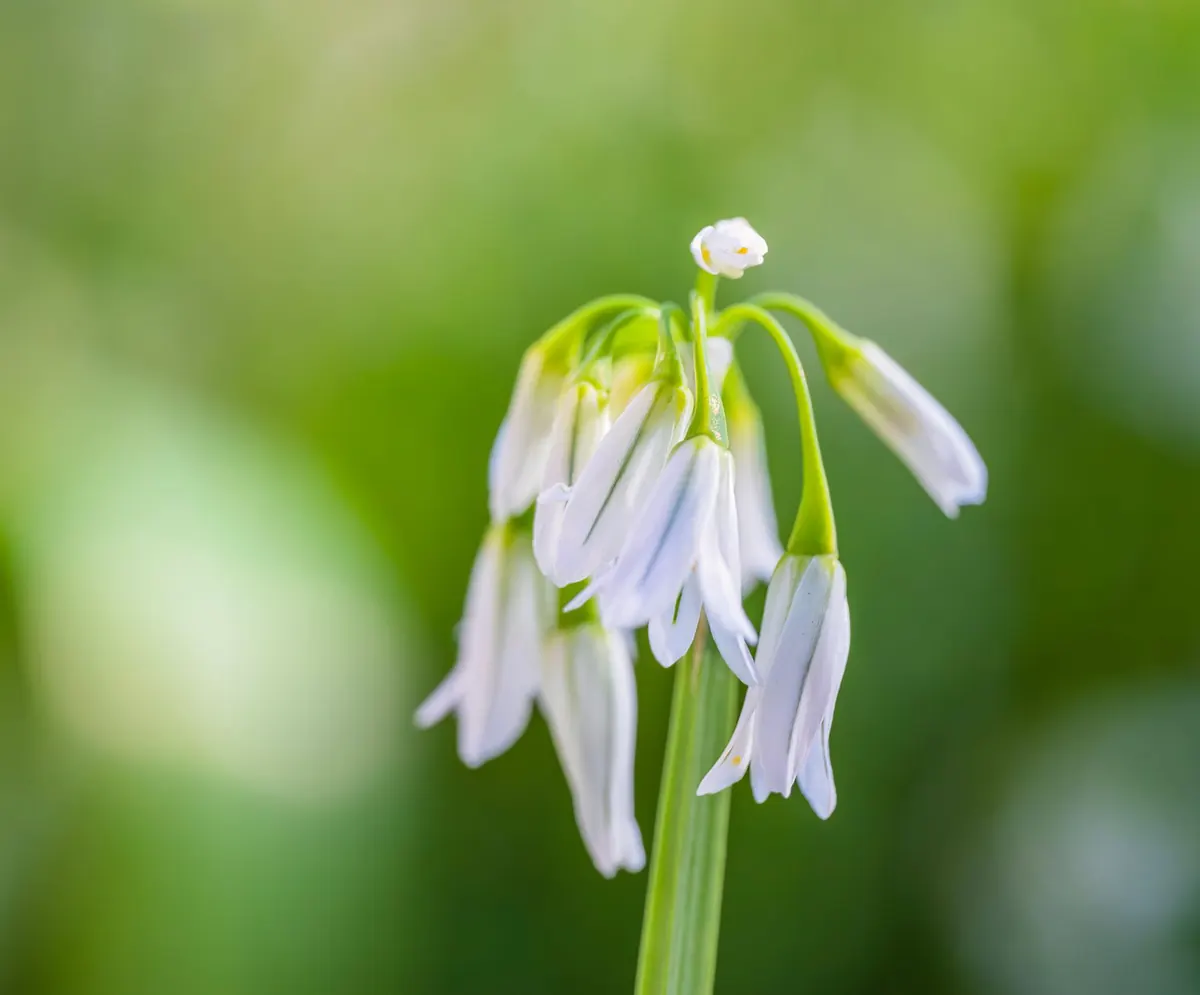
One lookalike you can keep: three-cornered leek, another allium, with triangular stems and edible leaves and flowers. If the garlic smell is there, it is edible.
Where and when to pick
Aim for the middle of the season: March through to early May in most of the UK, later in the north and at altitude. Take leaves before the flowers open for the sweetest flavour. Once the plants are in full flower, switch to the flowers themselves — they are lovely scattered raw over a salad — and to the unopened buds, which pickle well like capers.
Pick from clean ground. Avoid verges beside busy roads, field edges that may have been sprayed, and popular dog-walking paths. Anything you cannot wash properly is not worth taking home.
The legal side, in plain terms
Rules differ across the UK and vary from site to site, so treat this as a starting point rather than legal advice.
- In England and Wales, the Wildlife and Countryside Act 1981 makes it an offence to uproot a wild plant without the landowner's permission. Picking leaves or flowers for personal use is generally not an offence on land you are entitled to be on, but picking for commercial gain is another matter.
- In Scotland, access rights allow you to pick wild plants for personal consumption, but not to uproot them.
- Northern Ireland has its own legislation, so check locally.
- Nature reserves, Sites of Special Scientific Interest, National Trust land and council woodlands often have their own byelaws that prohibit picking altogether.
In practice: find out who owns the land and ask. Never dig up bulbs, never pick to sell without written permission, and if a site's rules are unclear, leave the plants alone. If you are unsure about the legal position on a particular site, ask the landowner or the relevant countryside body before you take anything.
Harvest so the patch comes back
- Take one or two leaves per plant, never the whole clump. The plant needs leaves to store energy for next year.
- Cut with scissors close to the base rather than pulling, which can lift the bulb out of the soil.
- Harvest from the middle of a large patch, not the edges, so the garlic can spread outwards.
- Leave the bulbs alone entirely. Wild garlic spreads slowly, and a dug patch can take years to recover.
- Leave flowers on most plants so seed can set.
- Take only what you will actually use. One bag of leaves makes a surprising amount of pesto.
- Keep your feet on paths where you can. Woodland plants such as bluebells do not cope well with trampling.
- Wash the leaves thoroughly in cold water, dry them, and use within a few days — or preserve them. Wash your hands too; the smell lingers.
Four simple kitchen uses
- Pesto — leaves, toasted nuts, hard cheese, olive oil and a squeeze of lemon, blitzed roughly. Freeze in ice cube trays.
- Wild garlic butter — finely chopped leaves folded into softened butter with a little salt, rolled in parchment and frozen.
- Soup — cook potato and leek until soft, then blend in a big handful of leaves off the heat.
- Eggs and rice — stir chopped leaves through scrambled eggs, omelettes or risotto in the final minute.
Keep the heat low and the cooking short. Long cooking kills the very thing you came for, so use the leaves raw where you can and add them late when you can't.
Before you head out
Three habits cover almost everything: crush and smell every leaf, get permission before you pick, and take one leaf per plant instead of a handful. Carry scissors and a bag, not a trowel.
If you are not completely certain of your identification, leave it. If you have a health condition, an allergy or you are pregnant, speak to a medical professional before eating any foraged plant for the first time. And check the current rules for the land you plan to visit — a quick look at the site's signage or a word with the landowner takes a minute and keeps foraging a welcome activity rather than a nuisance.
Photo: Robert So / Pexels